

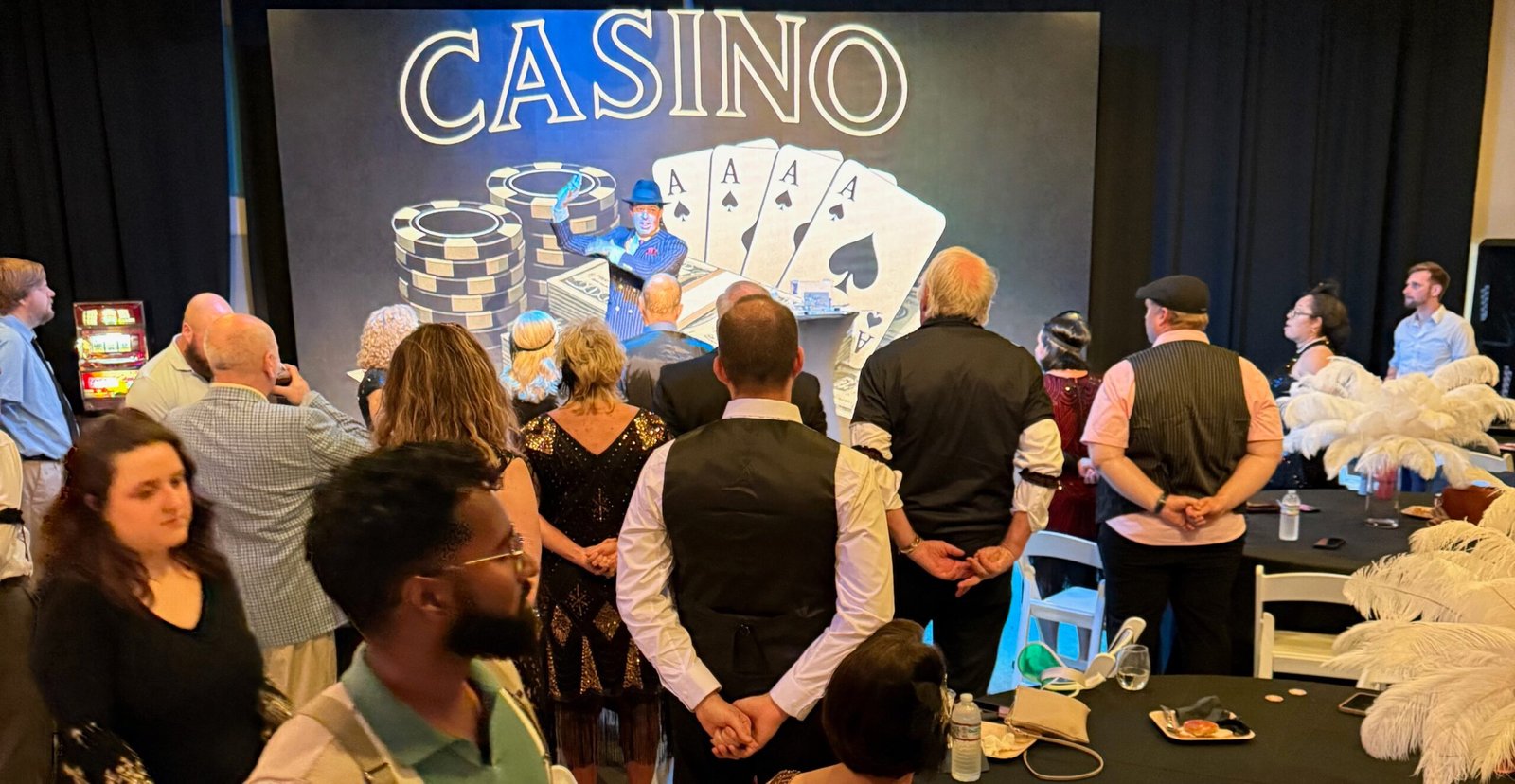
If you are planning an event and comparing a magician vs mentalist, you have probably noticed they sound similar. There is some overlap, but they create very different experiences for an audience. Understanding the difference helps you make the right call for your event.

What a Magician Does
A magician performs illusions. The focus is on objects, sleight of hand, and visual spectacle. Cards, coins, scarves, disappearing acts, sawing someone in half. The audience watches something happen that should not be possible, and the experience is primarily visual. Magic is impressive, often theatrical, and can be a lot of fun.
The relationship between a magician and the audience is largely one of observer and performer. Something amazing happens in front of you, and you react to it.
What a Mentalist Does
A mentalist works with the mind. Instead of manipulating objects, a mentalist appears to manipulate thoughts, perceptions, and decisions. The performance involves things like reading someone’s thoughts, predicting choices before they are made, revealing personal information about a stranger, or demonstrating seemingly impossible feats of memory and intuition.
The key difference is that the audience is not just watching. They are participating. A mentalist draws people in, makes them feel like the experience is happening to them personally, and creates moments that feel genuinely inexplicable. The reaction is not just amazement, it is often a little unsettling in the best possible way.
Why It Matters for Your Event
For corporate events, private parties, and professional gatherings, mentalism tends to land differently than traditional magic. Here is why.
A mentalist performance sparks conversation. When something happens to a guest personally, when their thought is read or their choice is predicted, they immediately turn to the person next to them and say “did you see that?” That kind of peer-to-peer reaction is something a visual magic act rarely produces at the same level.
Mentalism also plays well with sophisticated audiences. Corporate crowds, executives, and professionals tend to be skeptical by nature. A mentalist who can genuinely astonish a room full of skeptics earns a different kind of respect than a performer doing visual tricks.
Can a Performer Do Both?
Yes. Many experienced performers blend elements of both magic and mentalism into a single show. Close-up sleight of hand can be woven into a mentalism performance, and a stage magic show might include mind-reading elements. The best performers know how to read a room and adjust the balance based on what the audience responds to.
Which One Is Right for Your Event?
If you want something visually spectacular and theatrical, a magician might be the right fit. If you want something that gets personal, creates individual moments with guests, and leaves people genuinely questioning what just happened, a mentalist is the stronger choice.
For corporate events, cocktail hours, private parties, and any gathering where you want guests talking to each other rather than just watching a stage, mentalism delivers something that is hard to replicate.


